
?unique=e60fc0b)
?unique=e60fc0b)

Kenya Finca De Cafe Peaberry specialty coffee beans
| ROASTING PROFILE: ESPRESSO |
| Brand: R Coffee Roastery |

R Coffee Roastery
A specialty coffee roaster from Hungary, offering a unique coffee experience.
CIKKSZÁM :
KE3505PB-250Tags :

100% quality guarantee

money-back guarantee

Szállítás
990 Ft-tól
Our take:
juicy tomato, rosehip
Roast profile: light
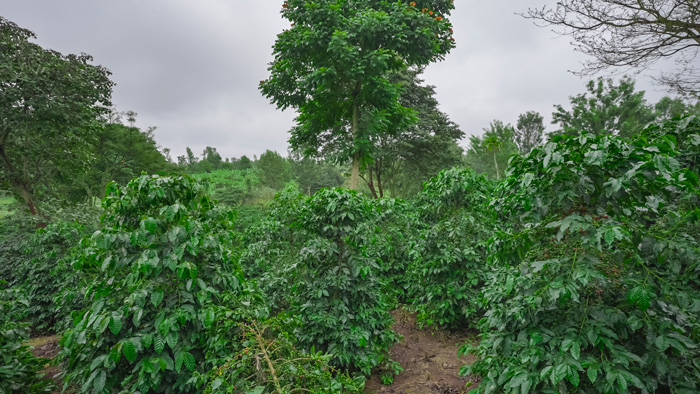
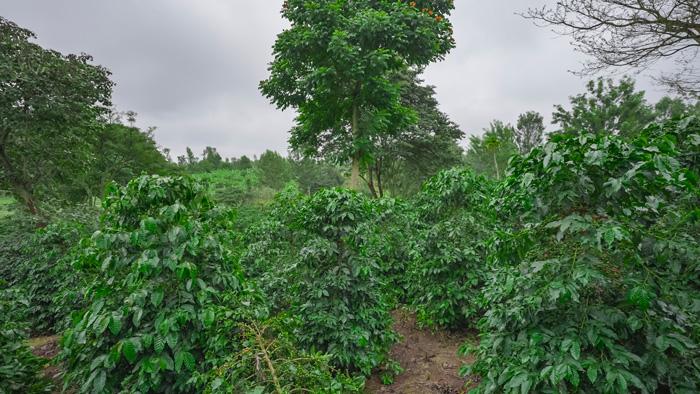 In the heart of picturesque Kirinyaga, just an hour and a half from Kenya's capital, lies Finca De Café – a true gem at 1,450 metres above sea level, with breathtaking views of majestic Mount Kenya. Spread across eight hectares, the farm strikes a perfect balance between nature and carefully planned agricultural practices. Founded in 2010, this family farm is run by experienced coffee professionals, ensuring high standards of sustainable farming from cultivation to harvest. The farm grows Ruiru 11 grafted onto SL 28 rootstock, which makes the trees resistant to coffee leaf rust and coffee berry disease. Thanks to the strong root system of the SL rootstock, the trees can more easily access vital minerals in the soil, resulting in a complex, sensorially rich coffee profile.
Above the coffee trees rise impressive native species such as Albizia, Spathodea, Acacia and Cordia. They not only provide a home for birds – their fallen leaves also enrich the soil with organic matter. The shade they offer promotes even cherry ripening, giving the coffee balanced acidity, rich aroma and a fuller body – a real treat for specialty coffee lovers.
As part of their regenerative farming practices, they regularly mulch with brachiaria and vetiver grass and use farmyard manure, ensuring that no soil-borne diseases enter the farm. They also regularly apply beneficial microorganisms such as Trichoderma and mycorrhizae to further improve soil health.
The farm receives between 800 mm and 1,200 mm of rain a year, and a peaceful stream runs through the property. Knowing how important irrigation is for the harvest, they channel water from the stream into an artificial reservoir, which is used to irrigate the coffee trees during the drier months. As a result, they harvest at least 20 tonnes of ripe coffee cherries every year.
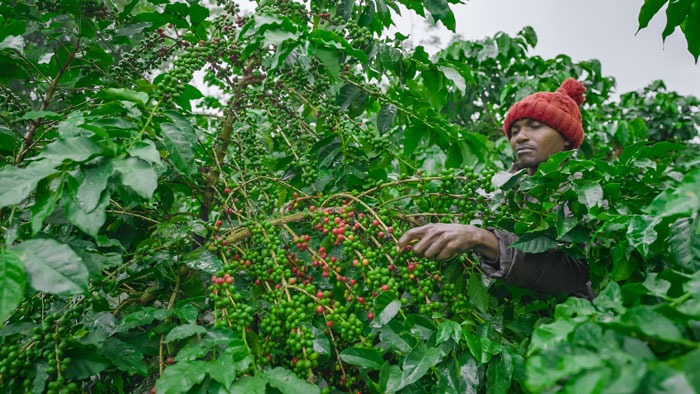
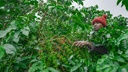
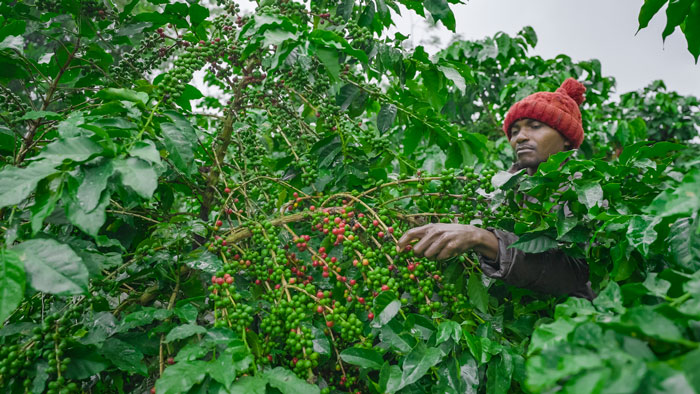 Harvest time is a real hive of activity: twice a year – from April to July and from October to December – busy hands pick the ripe red cherries one by one, ensuring the finest quality. The cherries are then hand-sorted to remove unripe and overripe ones, which are later processed as naturals. The ripe red cherries are processed using the wet method and then dried before being taken to the dry mill. Both their natural and washed coffees retain their characteristic savoury taste.
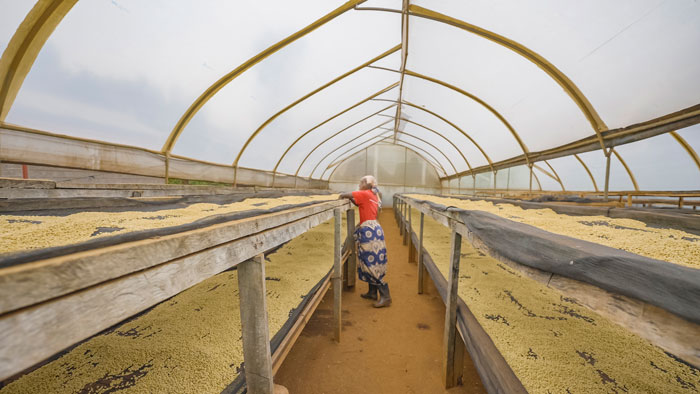
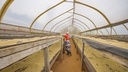
After harvest, the coffee beans are dried on solar-powered dryers. This method reliably ensures that each lot dries consistently, especially during long rainy and cold spells.
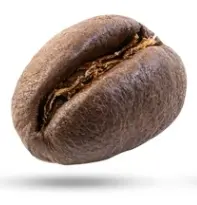 What is a Peaberry?
Most coffee cherries develop two flat-sided seeds.
In a “peaberry” (or “PB”), a natural mutation means only a single, round seed develops inside the cherry – hence its distinctive shape.
Why is it special?
- Because only one seed develops, that single bean can use all the available nutrients that would normally be shared between two.
- Thanks to its rounder, more uniform shape, it achieves more even heat transfer and tumbling in the roasting drum, so roasters often find they can reach a more stable profile.
- Although the specialty community debates whether the mutation itself really produces better flavour, the consensus is that the “one seed, one cherry” form is something special – especially when cultivation and processing are excellent too.
ORIGIN: KENYA
REGION: Kirinyaga, own washing station
VARIETY: SL 28, SL 34, Ruiru Grafted, Batian
ALTITUDE: 1350-1455 MASL
PROCESS: Washed